
Renovating an old door in rural France often starts with optimism, but it quickly turns into discovery, frustration, and surprise. This video follows the attempt to restore a battered antique oak front door bought from a reclamation yard for less than €10, and it perfectly captures the reality of budget renovation projects in France.
Restoring a €8 Oak Door in Rural France on a Budget
At first glance the door looked like firewood, but hidden beneath layers of paint, rot, and woodworm was a piece of French building history worth saving. Because small victories matter when renovating an old farmhouse, this project became about more than just a door.
A Reclamation Yard Find Most People Walk Past
Reclamation yards in France are full of forgotten materials, and this oak door was no exception. Most buyers ignored it because it looked rotten, heavy, and beyond saving, but old house renovation often rewards curiosity.
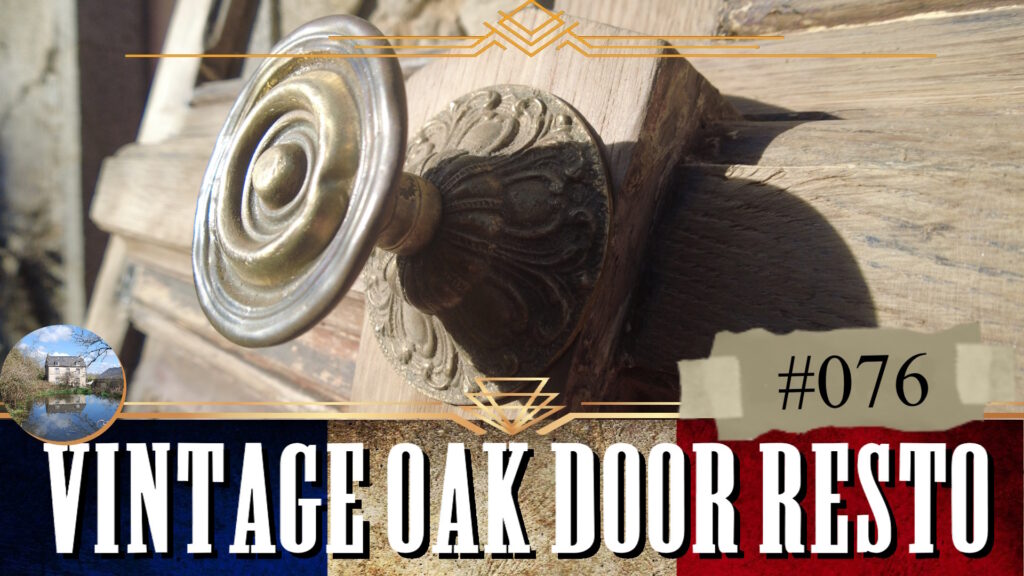
The door was solid oak, and it came with an ornate brass lock, so the risk felt worth taking. Buying second-hand building materials is one of the easiest ways to keep renovation costs down, especially when restoring a rural property on a tight budget.
When Rot, Woodworm and Glue Take Over
Once dismantling began, the true condition of the door became clear. The lower section was badly affected by woodworm damage, and much of the oak had rotted away, but that didn’t mean it was useless.
Layers of glue, nails, and thick infill made disassembly painfully slow, so progress required patience and brute force. This is the reality of renovating old houses in France, where nothing comes apart the way you expect it to. This oak door restoration was quickly getting out of hand.
The Antique Lock That Made It Worth Buying
The real reason for buying the door revealed itself once the ironwork was exposed. The original antique scrolled lock still worked smoothly, and that alone justified the purchase.
Later, a much heavier JPM brass lock, likely over 150 years old, was selected from the workshop collection. It offered better security, but it still suited the period, which is essential when restoring traditional French buildings.


Stripping Paint to Reveal Ancient Craftsmanship
Removing paint from the grille de portes turned into a battle. Paint stripper failed completely, and wire brushing barely made a dent, but persistence paid off in the end.
Underneath the grime were beautifully forged iron bars, each one unique, because they were made by eye in a forge. These details show why traditional craftsmanship matters, and why preserving original features is so important in an old house renovation.
Hidden Panels, Flathead Screws and Surprises
As the door came apart, hidden panels and original fixings were uncovered. Flathead screws, wooden dowels, and handmade joints told the story of how the door was originally built.
Although much of the timber couldn’t be saved, several sections were kept as templates. Even rotten wood has value when you’re trying to replicate historic joinery accurately and economically.
Rebuilding the Door Using Reclaimed Oak
A salvaged oak beam provided donor wood, but fungal rot meant only parts could be reused. Still, reclaimed oak is perfect for matching old timber, and it keeps costs low.
New sections were hand-finished, insulation and draft seals were planned, and traditional edges were preserved. Modern performance was added discreetly, because the goal was to make the door last another 150 years without losing its soul.
Old House Renovation Realities in France
Cold weather, delayed parts, broken vans, and unexpected repairs are all part of renovating in rural France. But despite the setbacks, the restored door is proof that budget renovation projects can still deliver beautiful results.
For anyone considering buying a fixer-upper in France, this project shows both the challenges and the rewards. With patience, reclaimed materials, and a willingness to adapt, even an €8 door can become a centre-piece again.
👉 Watch the full video: ▶️
Vintage Oak Door Restoration: Transforming a Hidden Gem pt 1
Project Timeline: Restoring a €8 Oak Door in France
Use the chapter links below to follow the full journey of restoring a forgotten antique oak door during a budget renovation in rural France. Each stage reveals the real challenges of old house renovation, but also the unexpected rewards hiding beneath decades of neglect.
▶️ 00:00– A €8 Oak Door That Looks Beyond Saving
A battered oak front door turns up for less than €10, and it looks like rot and woodworm have already won. But old house renovation often starts with bad decisions that lead to good stories.
▶️ 00:35 – The Reclamation Yard Find Nobody Wanted
Hidden in a French reclamation yard, this forgotten door was ignored by everyone else, but reclaimed materials are gold for budget renovation projects in France.
▶️ 01:12 – Opening the Door Reveals Serious Damage
As dismantling begins, layers of glue, nails, and woodworm damage appear. Renovating old houses means nothing comes apart easily, and this door is no exception.
▶️ 02:08 – The Antique Lock That Justified the Risk
The real reason for buying the door finally appears: a beautiful, working antique lock. Sometimes one historic feature makes the entire project worthwhile.
▶️ 02:41 – A Window Glued Shut by Decades of Paint
A hidden opening window is discovered, but it has been sealed shut with paint. Small surprises like this are common when restoring traditional French buildings.
▶️ 02:53 – Paint Stripping Fails on Historic Ironwork
Paint stripper, cling film, and patience all fail against stubborn layers of paint, so more aggressive methods are needed to save the grille de portes.
▶️ 04:00 – Ancient Craftsmanship Finally Revealed
After hours of grinding and brushing, hand-forged ironwork emerges. Each mark tells a story, because nothing about this door was mass-produced.
▶️ 06:16– Choosing a 150-Year-Old Brass Lock
A heavier, more secure antique lock is selected to keep the door period-correct, while still improving safety in a rural France renovation.
▶️ 09:09 – Hidden Panels and Original Fixings Discovered
Unexpected panels, flathead screws, and wooden dowels are uncovered, revealing how traditional doors were assembled long before modern tools.
▶️ 12:39– Rotten Wood Becomes Valuable Templates
Most of the oak is beyond saving, but it still plays a crucial role. Even damaged timber helps recreate accurate joinery during restoration.
▶️ 14:10 – Hunting Reclaimed Oak in the Barn
Old beams and forgotten timber are searched for usable oak. Reclaimed wood keeps costs down and matches the character of old houses in France.
▶️ 16:02 – Disaster Strikes with Fungal Rot
A promising donor beam fails inspection, proving again that renovation projects rarely go to plan, especially on a tight budget.
▶️ 17:48 – Rebuilding the Door by Hand
New oak sections are shaped, fitted, and finished using traditional methods. Every repair balances authenticity, durability, and affordability.
▶️ 20:31 – Making the Door Last Another 150 Years
Modern insulation, draft sealing, and improved security are discreetly added, because old house renovation should respect history but improve comfort.
▶️ 24:09 – Not Finished Yet, But Worth Every Hour
Despite cold weather, delays, and setbacks, the restored oak door proves that budget renovation in rural France can still deliver incredible results.